How Online Camera Stores Use Ecommerce Technology to Improve Product Discovery
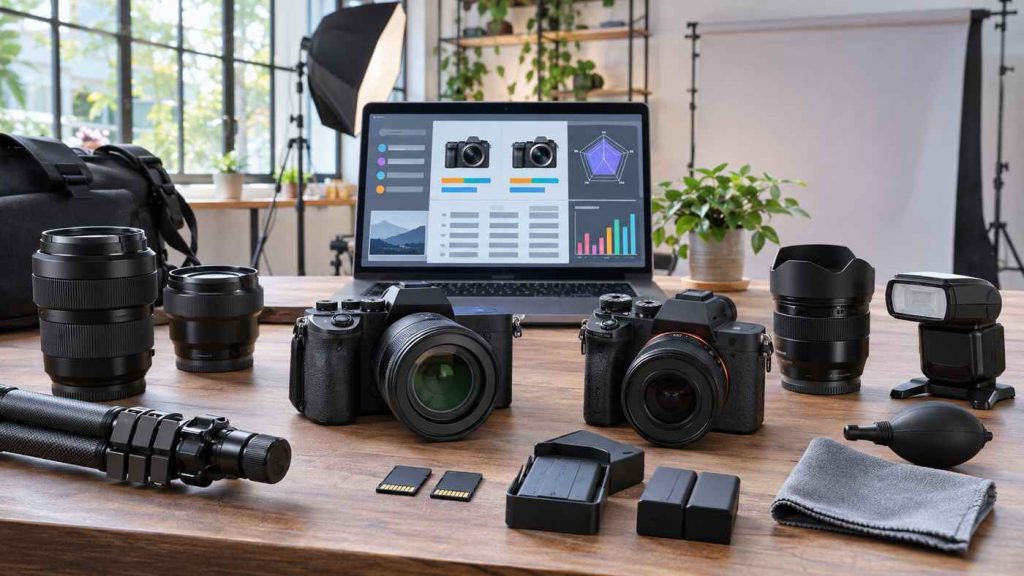
Online camera stores use ecommerce technology to help customers research and purchase digital cameras, lenses, and photography accessories. Modern storefronts organize technical information, display detailed product images, and provide tools for comparing equipment. These features matter because choosing photography gear often involves understanding sensor sizes, lens compatibility, autofocus systems, and other specifications. A well-organized digital catalog makes complex purchasing decisions easier for beginners and experienced photographers.
Behind these shopping experiences are ecommerce platforms that manage product information, inventory, payments, and customer interactions. Retailers considering customized storefronts can like BrainVire can read more about their ecommerce capabilities when reviewing how development providers implement specialized catalog features and system integrations. The most useful solutions combine accurate product data with practical navigation tools that support informed purchasing decisions.
Why Product Discovery Matters for Camera Retailers
Photography equipment requires more detailed research than many everyday consumer products. Two cameras may look similar but differ considerably in image quality, video recording features, or lens compatibility. Customers need reliable information before deciding which equipment meets their requirements.
Research from the Baymard Institute identifies product filtering, sorting, and information presentation as important elements of ecommerce usability. Its product listing research uncovered more than 700 usability issues across 19 major ecommerce websites. These findings demonstrate why organized catalogs and effective navigation deserve attention.
Camera retailers can address these challenges through consistent product descriptions, high-resolution images, and searchable technical specifications. Clear categories help visitors distinguish mirrorless cameras, DSLR models, compact cameras, lenses, and accessories without navigating unrelated products.
Essential Ecommerce Features That Improve Product Discovery
1. Advanced Product Filtering
Advanced filters allow shoppers to narrow large catalogs using specific technical requirements. Camera buyers might search by manufacturer, sensor format, resolution, price, or video recording capability. Lens shoppers may filter by focal length, maximum aperture, mount type, and stabilization features.
Adobe Commerce documentation explains that product attributes can support layered navigation, allowing customers to filter catalog results through selected characteristics. This approach is particularly useful for technical equipment with numerous specifications.
2. Product Comparison Tools
Comparison tools display multiple camera models alongside one another. Rather than switching between product pages, customers can review differences in sensor dimensions, autofocus performance, battery life, and recording formats.
For example, Nikon explains that its DX sensor format measures approximately 24 by 16 millimeters, while its FX full-frame format measures 36 by 24 millimeters. Presenting such differences in a comparison table helps buyers understand how equipment specifications affect their choices.
Useful comparison tools should emphasize meaningful differences instead of presenting lengthy lists of identical specifications.
3. Clear Product Images and Compatibility Information
Detailed photographs help customers inspect camera controls, lens mounts, ports, and physical dimensions. Multiple viewing angles are valuable when evaluating unfamiliar equipment.
Compatibility information is equally important. Canon confirms that its EF-EOS R mount adapter supports compatible EF and EF-S lenses on EOS R cameras. However, EF-M lenses are excluded. Clearly identifying these restrictions helps customers avoid purchasing incompatible accessories.
Retailers should also provide manufacturer-supported compatibility information for batteries, memory cards, flashes, and camera grips.
4. Inventory Synchronization
Inventory synchronization connects storefront availability with warehouse or physical store records. This becomes important when retailers sell equipment through several channels or maintain stock across multiple locations.
Adobe Commerce supports inventory management using sources, stock quantities, and order reservations. Such mechanisms help retailers track available products and reduce inconsistencies between displayed availability and actual stock.
Accurate inventory information also helps customers distinguish products ready for immediate shipment from those requiring additional fulfillment time.
5. Personalized Recommendations
Recommendation systems suggest products based on browsing activity, product relationships, or purchasing patterns. Someone viewing a mirrorless camera might receive suggestions for compatible lenses, memory cards, or protective cases.
Adobe Commerce offers recommendation features informed by shopper behavior and catalog information. The growing use of AI-assisted camera research also reflects how consumers are turning to automated tools to compare specifications, understand technical features, and narrow their purchasing options. However, camera retailers should apply compatibility rules alongside automated suggestions. A popular accessory is not necessarily appropriate for every camera system.
6. Secure and Convenient Checkout
Checkout systems must provide clear pricing, shipping information, and trustworthy payment handling. Expensive photography equipment makes transaction transparency particularly important.
Retailers should use secure payment integrations, protect customer information, and minimize unnecessary checkout steps. Compliance with applicable PCI Security Standards Council requirements is an important consideration when handling payment card data.
How Modern Ecommerce Platforms Manage Complex Catalogs
Modern ecommerce platforms provide administrative tools for organizing thousands of products. Retailers can create categories, manage technical attributes, update pricing, and maintain product descriptions through centralized systems.
Adobe Commerce and Magento Open Source provide catalog management features that support product attributes and configurable navigation. Their suitability depends on a retailer’s technical resources, customization requirements, and operating budget.
Integration capabilities also deserve attention. Connecting ecommerce software with inventory management, payment processing, and customer relationship management systems can reduce repetitive administrative work.
However, integrations require testing and ongoing maintenance. Incorrect product mapping, delayed inventory updates, or incompatible extensions can create operational problems. Retailers should evaluate these risks before implementing customized features.
What Should Camera Retailers Consider Before Upgrading?
Choosing an ecommerce platform requires balancing customer experience, operational needs, and long-term costs. Important technical considerations include:
- Catalog flexibility for detailed photography specifications and product variations.
- Compatibility filtering that distinguishes supported cameras, lenses, and accessories.
- Reliable inventory synchronization across warehouses and sales channels.
- Mobile responsiveness, accessible navigation, and fast product page loading.
- Secure payment processing and appropriate customer data protection.
- Integration options, maintenance requirements, and overall ownership costs.
Retailers should also assess whether their teams can maintain accurate technical data. Sophisticated search features offer limited value when product specifications are incomplete or outdated.
Conclusion
Ecommerce technology helps online camera stores turn extensive equipment catalogs into practical research tools. Advanced filtering, comparison features, compatibility information, and synchronized inventory records make photography products easier to evaluate.
The strongest platforms prioritize accurate information and reliable operations over unnecessary complexity. As camera technology and customer expectations evolve, retailers that maintain flexible catalogs, secure systems, and clear product discovery tools will be better prepared to support informed purchasing decisions.